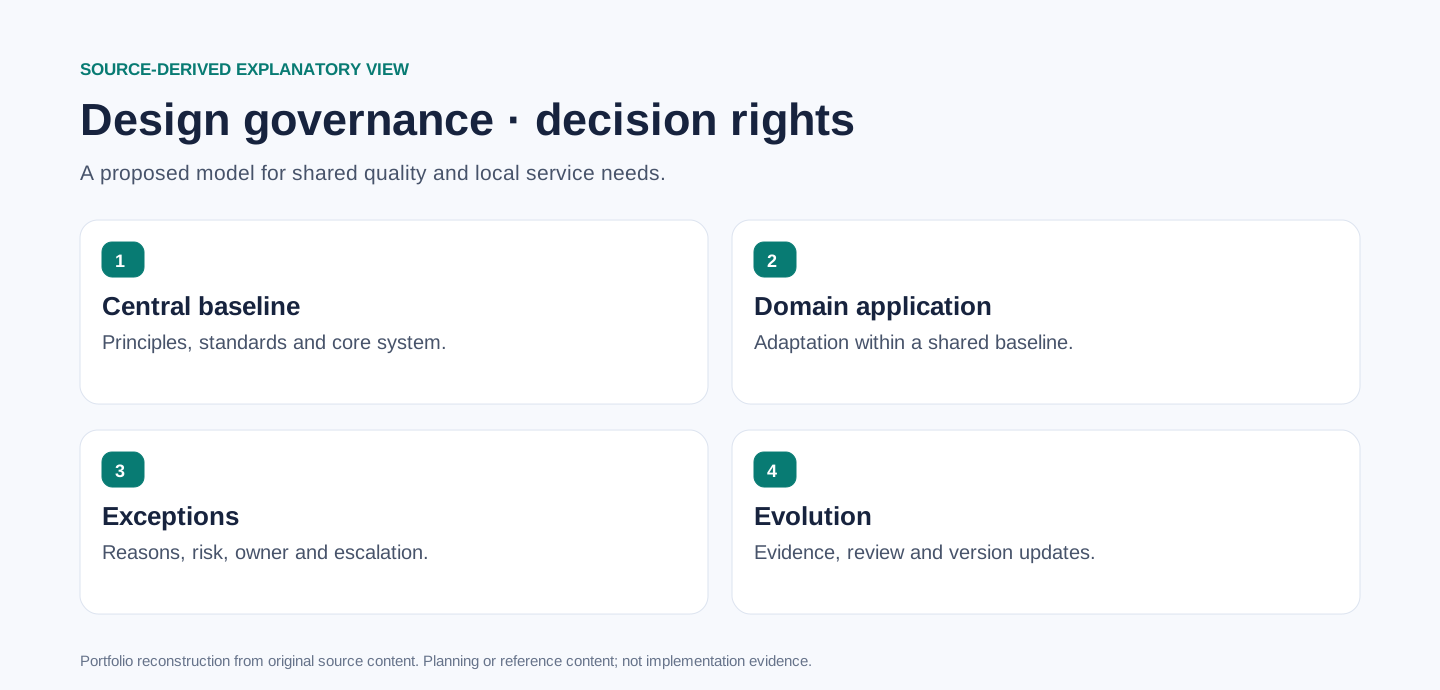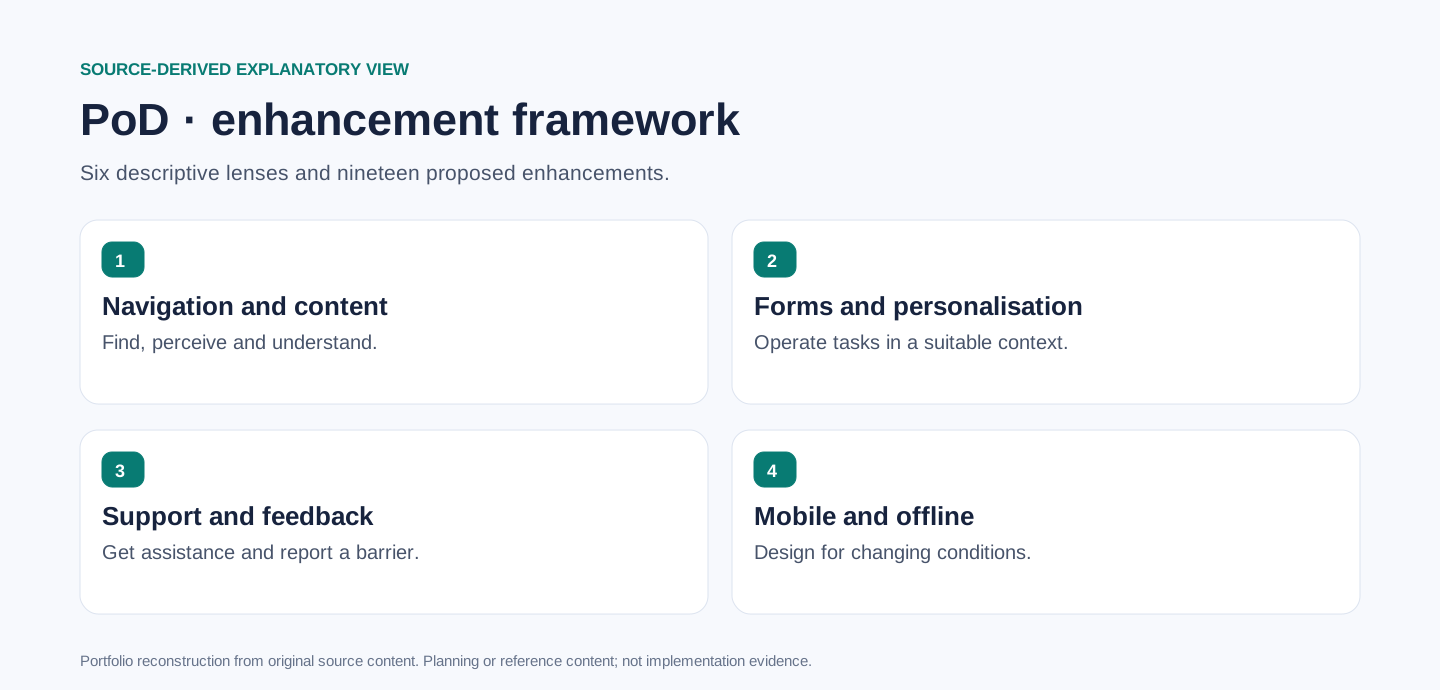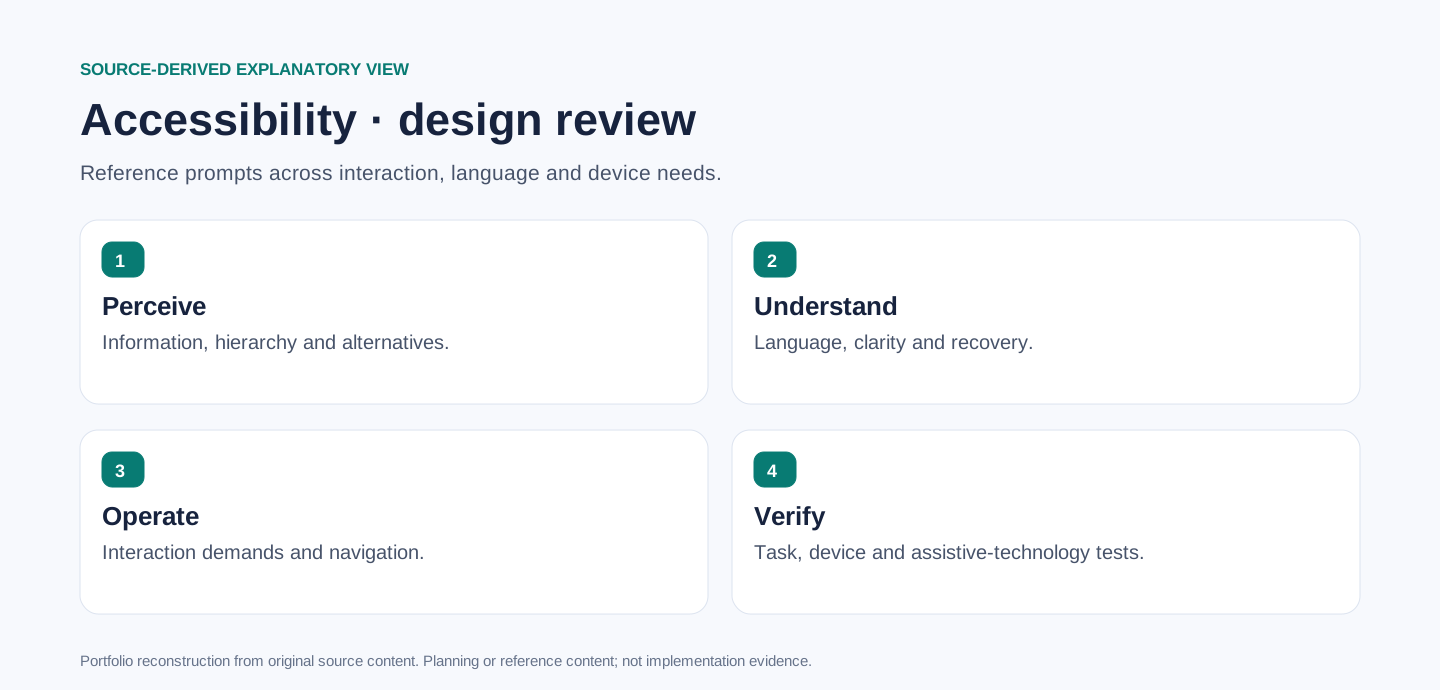
Give each phase an explicit purpose
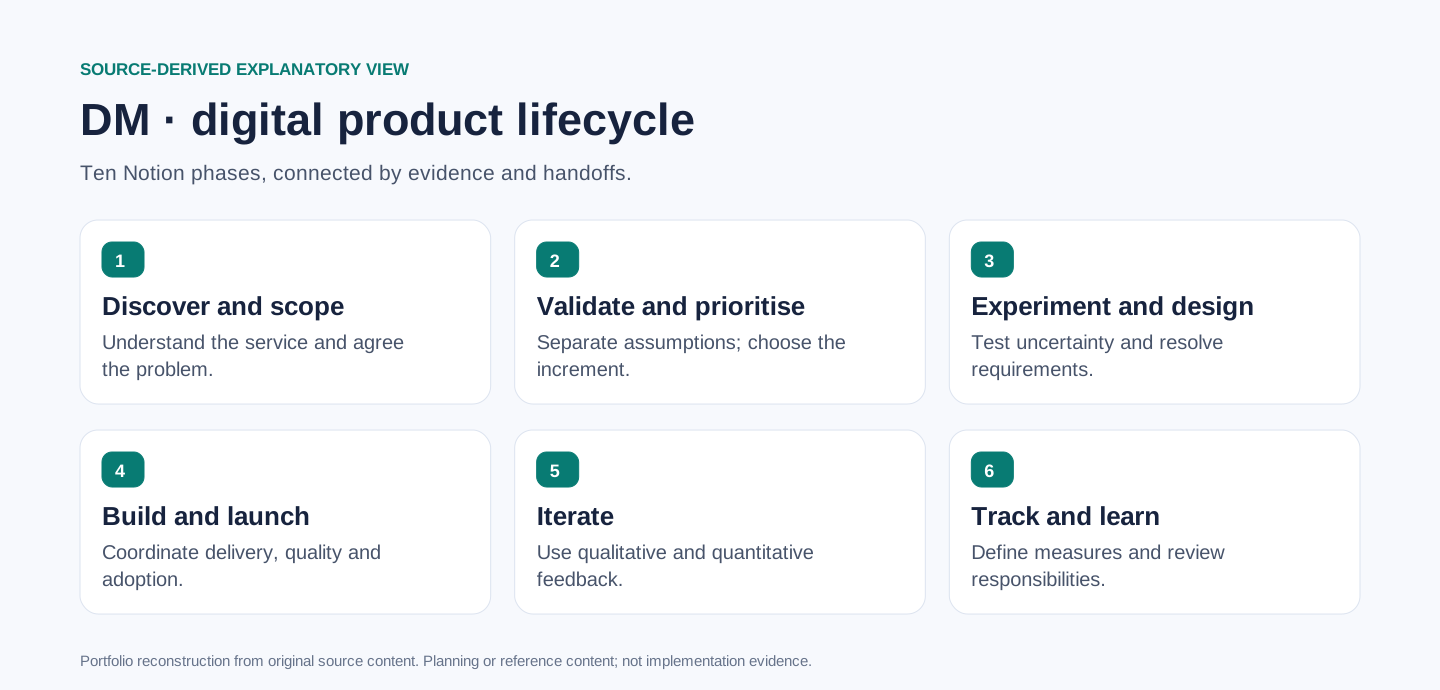
The Dubai Municipality Notion SOP and its overview describe a cross-functional digital-product lifecycle. The process links a customer problem and service context to priorities, requirements, experiments, delivery and measurement.
The live board contains ten phase groups with seven cards each. These are process records and role prompts, not seventy completed projects. The final tracking group contains placeholders. The local DM workbook and the Portal Unification SOP table are supporting versions of the same artifact family.
Start with the service and the evidence
Discovery asks for the service owner, overlapping services, partners, channels, rules, systems, contact/service-centre complaints and existing research. The objective is to understand what the enhancement should solve before selecting a solution.
Research quality is a task in its own right: check prior material for gaps, bias and integrity, then plan the next research round. Preliminary personas, jobs to be done, market/request context and an initial vision feed scope review.
| Input | How it informs the decision |
|---|---|
| Service owner, rules and partner dependencies | Establish who can decide and what the service must respect. |
| Complaints, suggestions and channel feedback | Identify recurring customer and operating friction. |
| Previous interviews, surveys and audits | Assess what is known, uncertain or weakly supported. |
| Current journey and systems | Find handoffs, duplication and constraints. |
| Success and counter metrics | Define intended benefit and unwanted consequences. |
Follow the work through ten phases
The sequence below translates the original Notion phase structure into a readable portfolio view. Outputs and decision questions are explanatory summaries of the source, not a signed approval matrix.
Discover
Review the brief, service, previous research, rules and customer/operating context.
Output: Problem, evidence gaps, initial vision and research direction.
Decision: Is there enough understanding to review the scope?
Re-evaluate scope
Realign expectations, timeline, deliverables and the main problem to solve.
Output: Updated scope, intended outcomes and a proposed MVP boundary.
Decision: Do the service owner and delivery teams share the same expectation?
Validation
Separate hypotheses from findings; plan research and check business/technical feasibility.
Output: Research conclusions, journey understanding and validated or unresolved assumptions.
Decision: Which assumptions should change the product direction?
Define priorities
Balance value, cost and constraints to choose the next useful increment.
Output: Ordered product scope and roadmap priorities.
Decision: What is essential now, and what should be deferred?
Experiment
Use a prototype or minimum feasible version to test the important uncertainty.
Output: Experiment hypothesis, method and learning.
Decision: What evidence supports continuation, change or stopping?
Design
Connect epics, modules and features to UX and technical architecture.
Output: Flows, interface decisions, requirements and acceptance criteria.
Decision: Are the customer task and implementation expectations clear?
Build
Coordinate implementation, clarify requirements and review the intended experience.
Output: Implementation increment and readiness issues.
Decision: Are the agreed requirements testable and ready for review?
Launch
Plan GTM, quality assurance, operational readiness and funnel instrumentation.
Output: Launch scope, support preparation and measurement setup.
Decision: Is the release ready for its intended users and operating team?
Iterate
Use qualitative and quantitative feedback to improve the product.
Output: Prioritised learning and improvement decisions.
Decision: Which observed problem should the next increment address?
Track & iterate
Maintain a feedback and performance loop; complete the final tracking prompts before operating the process.
Output: Defined review cadence and measures.
Decision: Who reviews the evidence, and what decision follows?
Make the handoff understandable
The DM overview defines Product Owner, IT Project Manager, Technical Lead, UX Lead and Research Lead responsibilities. The working cards also include marketing activities, linking product scope to positioning and adoption.
Jira/Confluence provides delivery traceability; Figma/Miro supports interface, flow and collaborative work; Teams supports coordination. Arabic/English research, accessibility, security/privacy and government requirements are stated process considerations.
| Role | Responsibility described in the reference |
|---|---|
| Product Owner | Product outcomes, scope, priorities and decision alignment. |
| IT Project Manager | Delivery coordination, timeline and dependencies. |
| Technical Lead | Architecture, feasibility and implementation requirements. |
| UX Lead | Experience direction, design readiness and quality. |
| Research Lead | Research planning, execution, integrity and synthesis. |
Connect requirements to a readiness gate
A useful handoff connects a finding to a product decision, a user story and an acceptance criterion. Success measures need counter measures so a faster flow does not hide more errors or support work.
The original process map distinguishes mandatory and recommended methods. This makes the framework adaptable to the problem rather than a demand to perform every method for every project.
The documented DM copy still includes generic venture/client language, and no populated approval or execution record was established. The artifact is presented as a working municipal adaptation; its next operational step is a reviewed owner/version and a project-specific pilot.
Outcomes and learning
Phase groups in the live Notion board
Core roles in the DM overview
The artifact gives teams a common lifecycle, evidence requirements and handoff vocabulary. It is a documented working process, with formal adoption and execution results still separate from the reference.
About the evidence
- DM Digital Product Development – Overview and live DM SOP database in Notion; DM SOP workbook; SOP table in Portal Unification; original process-map variants.
- Versions and diagram copies are one artifact family. Unassigned fields and placeholder tracking cards are preserved as maturity limits.