Keep a shared experience coherent
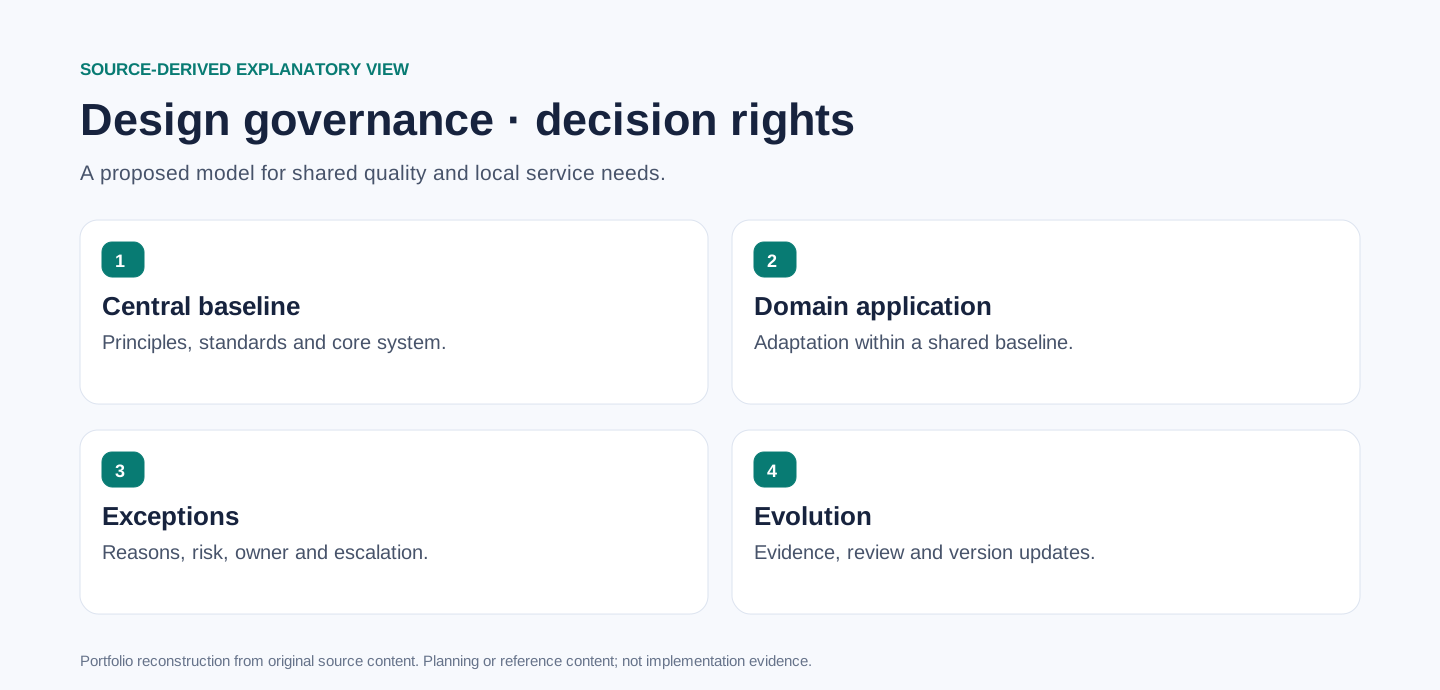
A multi-service organisation needs common experience standards while different domains retain their business context. Without decision rights, every exception becomes an informal discussion and every team can interpret a shared component differently.
The original governance framework in Portal Unification connects strategy, roles, standards, cross-channel responsibilities, maturity and measurement. It is a proposed operating model, not evidence that its council or organisation was established.
Distinguish central ownership from domain adaptation
The framework separates shared principles, standards and system ownership from domain-specific application. Exceptions and evolution need an explicit route so local learning can improve the common system.
| Decision | Governance concern |
|---|---|
| Principles and standards | Maintain a shared definition of experience quality. |
| Components and system changes | Review reusable changes and their cross-product effects. |
| Domain adaptation | Meet the service need while respecting the common baseline. |
| Exceptions and escalation | Document the reason, risk and decision owner. |
| Evolution and versions | Feed evidence into reviewed updates rather than silent divergence. |
Treat governance as a working loop
Cross-functional design, technical and service responsibilities make review more useful than a visual sign-off alone. A governance toolkit connects the brief, design review, handoff and feedback.
The maturity model and the 0–3, 3–6, 6–12 and 12+ month phases describe an implementation direction. They are proposed planning intervals, not an achieved maturity score or elapsed rollout.
Measure governance by the decision it improves
Consistency, accessibility, decision speed and delivery cost are useful categories only when defined for a specific workflow. A baseline should identify review cycles, repeated issues and exceptions before claiming improvement.
The next evidence would be a real decision log, a reviewed exception and a release governed through the process. These demonstrate use; the framework itself demonstrates the proposed structure.
Selected reference excerpts
Outcomes and learning
A reusable documented reference. Operational adoption and measured effects require separate execution evidence.
About the evidence
- Design Operation – Governance Framework, cross-checked against the Portal Unification strategy-to-measurement and decision-rights frames.
- Operating council, approved adoption date, actual maturity and attributable cost/speed improvement are not established.