Bring access needs into design review
The original eleven-page reference prompts designers to consider different interaction and communication needs before handoff. It includes mobile and kiosk context, language direction, testing and organisational support.
A checklist is useful when it leads to an actual design decision, issue or acceptance record. Unmarked boxes are prompts, not completed conformance checks.
Look beyond colour and contrast
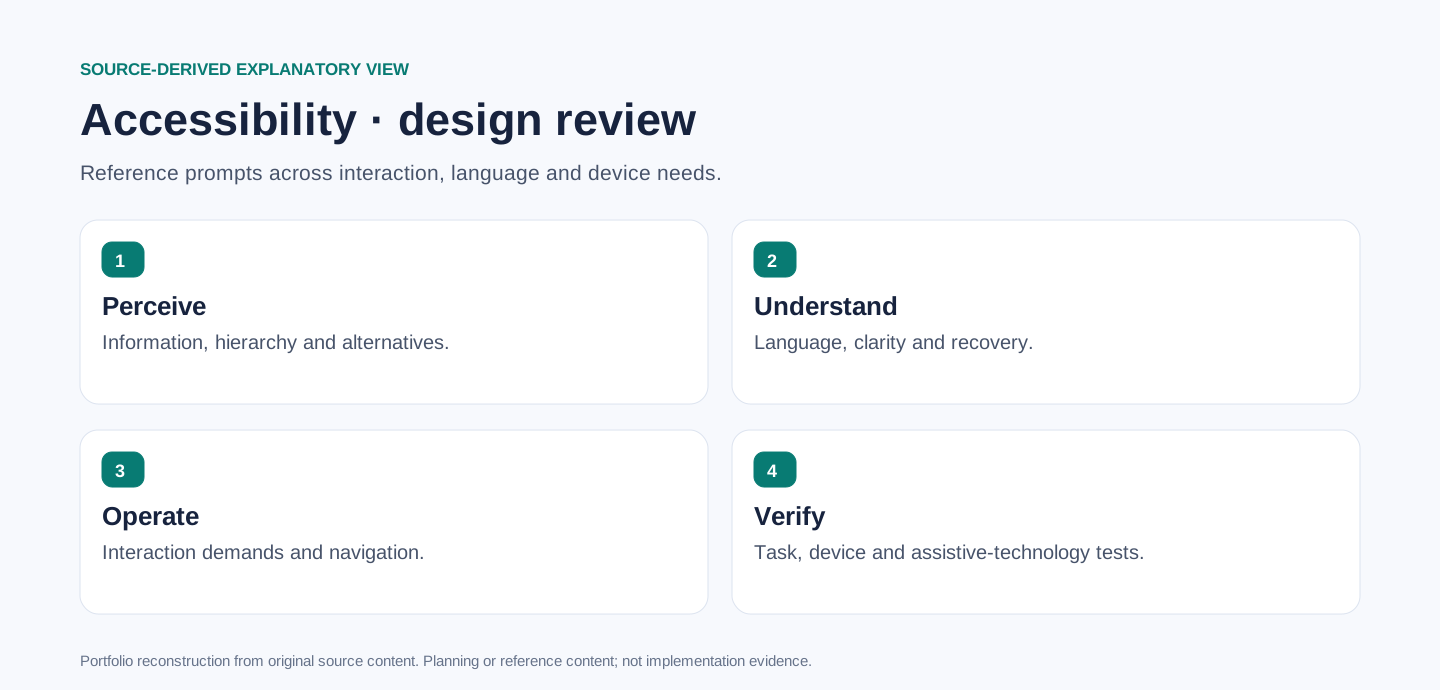
The categories span visual, hearing/audio, motor and cognitive needs. Language and context matter alongside the visual surface: Arabic/RTL, comprehension, touch targets, navigation and recovery affect whether a task can be completed.
Perceive and understand
Review information hierarchy, readable content, non-colour cues and alternatives for audio/visual material.
Operate and recover
Review interaction demands, focus/navigation expectations, errors and the route back to the task.
Language and device
Review Arabic/RTL layout and language quality alongside mobile/kiosk conditions.
Record the issue and the acceptance expectation
A design review should identify the affected task, the barrier and the intended remedy. Handoff then gives implementation and testing teams something they can verify.
Lifecycle prompts connect design, testing and organisational support. Training, procurement and champion roles in the reference are proposed support structures, not completed programmes.
Close the loop with testing
Keyboard, screen-reader, zoom and task-based testing can reveal barriers that a static design review misses. Findings need severity, ownership, resolution and a repeat check.
The case presents the reference and its review scope. Signed reviews, remediation closure and formal compliance require separate test evidence.
Selected reference excerpts
Outcomes and learning
A reusable documented reference. Operational adoption and measured effects require separate execution evidence.
About the evidence
- Original Designers Checklist PDF and matching visual/audio/motor, Arabic/RTL, mobile/kiosk and lifecycle frames in Portal Unification.