Begin with the value proposition
Equevu’s original MVP page frames a long-term savings and wealth-building proposition for the GCC. A new service in that context must learn about demand, trust and the practical effort of acquiring and onboarding customers.
The strategy uses early company relationships as a route to learning. It avoids assuming that a complete technology platform is the first thing needed to establish desirability.
Use the smallest feasible technology
The original approach combines high-value touchpoints, friendly early relationships and third-party tools. This is a minimum-technology validation strategy: learn whether the service proposition and operating path are useful before scaling infrastructure.
The boundary matters. A lean MVP is not simply fewer screens; it is a focused way to test the assumptions that can change the next investment decision.
Name the assumptions to learn
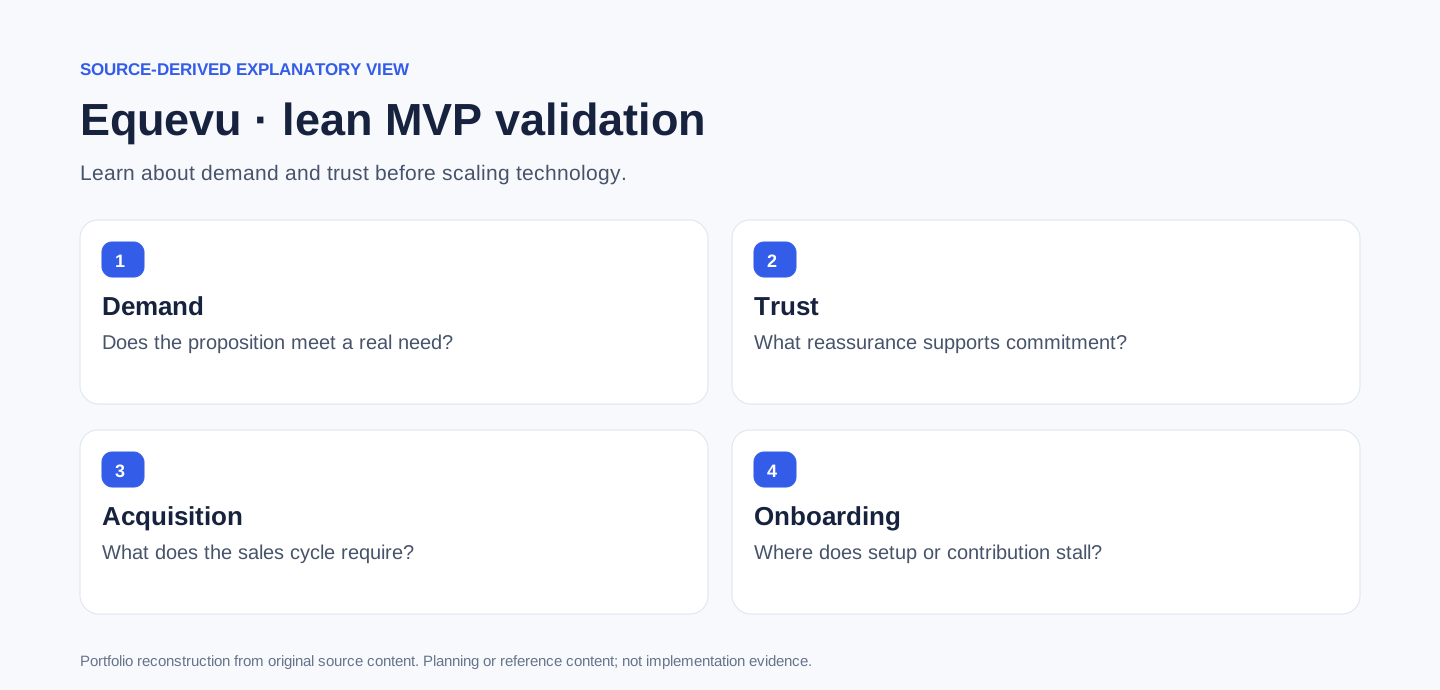
The page raises demand, trust, sales cycle, onboarding, contribution and bottleneck questions. They form a validation agenda rather than proof that research has already succeeded.
| Assumption area | Learning question |
|---|---|
| Demand | Does the intended customer value the savings proposition? |
| Trust | What reassurance and relationship are needed before commitment? |
| Acquisition | What does the sales cycle require? |
| Onboarding | Where does the initial relationship or setup stall? |
| Scale | Which operating constraints should be resolved before growth? |
Let early relationships shape the next stage
Early company engagement and sales-support material form the proposed market-entry learning path. The linked timeline is an original reference, but its milestones were not independently read in the current research.
A new portfolio validation map can organise the source questions into assumptions, low-cost tests and decision gates. That reconstruction must remain labelled as a proposed explanation, not a completed experiment.
Outcomes and learning
The original material establishes an MVP thesis and explicit validation questions. Completed customer studies, traction, economics and launch outcomes are not claimed.
About the evidence
- Original Equevu MVP page in Notion.
- Planning material is not evidence of personal ownership of every venture decision or a completed market launch.