Housing fees: diagnose the information problem
The source pain notes identify practical causes of avoidable effort and confusion.
The opportunity is therefore broader than improving field labels. The service needs a reliable connection to account and property data, a transparent calculation and a manageable route for corrections.
- The service purpose and the public value of the fee were not clearly explained.
- Customers had to re-enter DEWA and Ejari information themselves.
- The process was insufficiently automated, allowing inappropriate applications and avoidable rejection.
- Charges could remain unchanged after ownership or tenancy changes because current rental and source data were not refreshed.
These are historical project observations and recommendations, not a statement of current government policy.
Housing-fee pain notes and recommendation list.
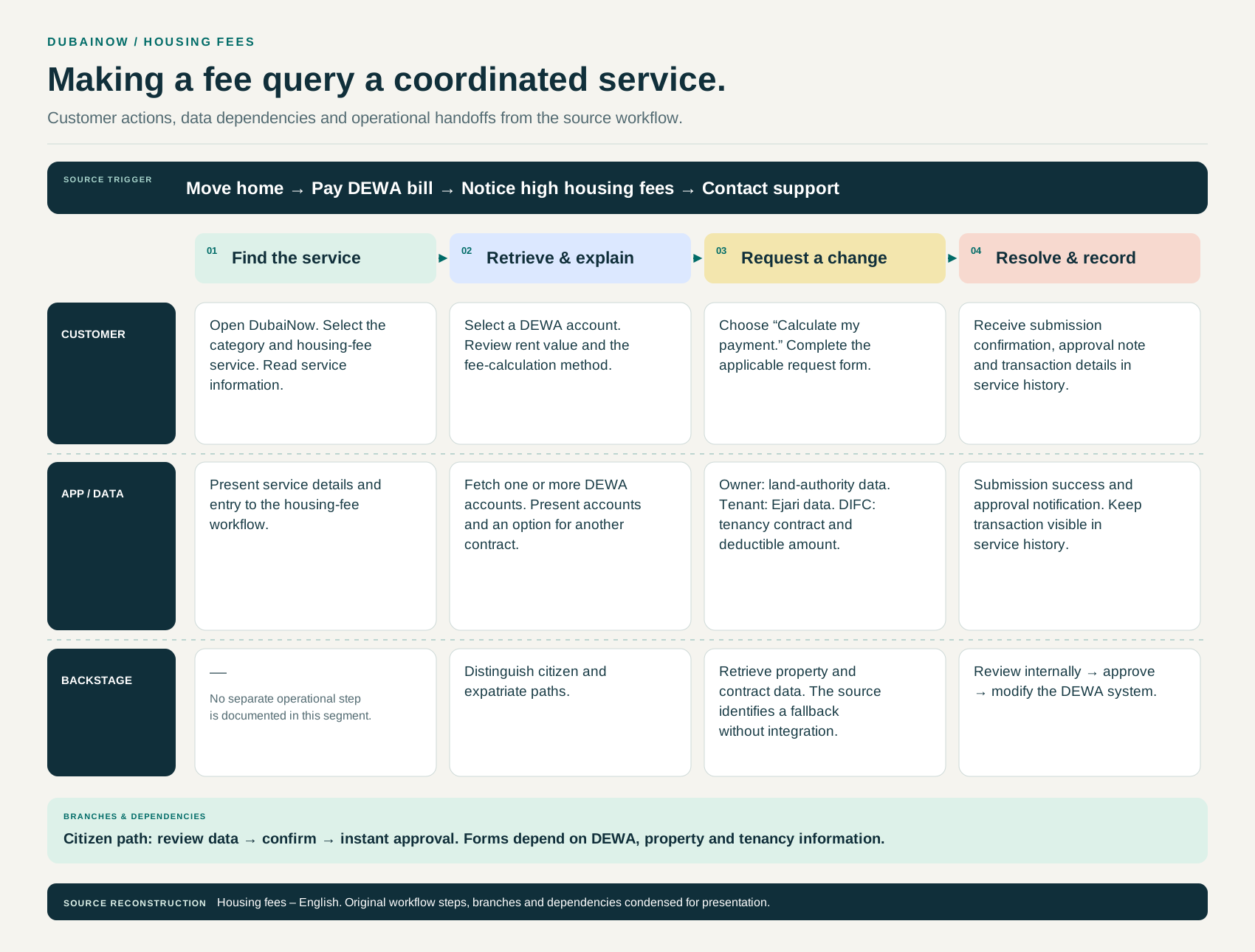
Give customers an understandable correction journey
Discover and understand
The journey begins with a move or an unexpectedly high utility charge, then service discovery and guidance about the fee.
Output: An explanation before the application.
Select the relevant account
The proposed flow retrieves DEWA accounts associated with the authenticated customer and supports selection where more than one account exists.
Output: Less repeated account entry.
Review the calculation and property context
Display the deductible amount and how it was calculated. Retrieve tenancy or ownership data where integrations allow, with an exception route where information is unavailable.
Output: A fee the customer can inspect and challenge.
Confirm or request a change
The blueprint preserves the ability to submit a correction request even after showing the calculation. Different tenancy, ownership and eligibility paths need different supporting information.
Output: A route for cases that automatic calculation cannot resolve.
Review, update and notify
The internal path connects municipal approval to updating the DEWA system, notifying the customer and retaining the service history.
Output: A visible connection between the decision and the bill.
The blueprint includes a simpler eligible-customer path and manual review paths. Release status is not established for each proposed integration or rule.
Housing fees English blueprint and recommendations.
Move from reactive correction to source-driven updates
A separate automation flow proposes updating the fee when the underlying information changes.
The source also marks data adequacy as a dependency: what the service needs must be compared with what connected systems actually provide. Until full automation is feasible, the recommendation is to improve the existing correction journey.
| Source event | Proposed operational response |
|---|---|
| New DEWA contract or move-in | Check customer context and derive the relevant billing treatment. |
| Ejari renewal with a rent-value change | Refresh the value used in the calculation. |
| Ownership record change | Retrieve property details and the relevant rental-value context. |
| Periodic RERA update | Refresh the rental-value input rather than preserving an obsolete value. |
| Calculation complete | Set the deductible value, update DEWA in line with billing dates and notify the customer. |
This is a proposed automation design. Historical percentages, eligibility rules and update intervals in the working artifact are not presented as current policy.
Housing-fee auto-modification flow.
Make channel questions part of the blueprint
The working notes explicitly ask why customers use the call centre and how to move a request directly into the digital channel.
- Notify customers through the channel in which they engaged.
- Reuse owner information from registration where appropriate.
- Define the approaching customer and the service card.
- Check service bundling with the business and include go-to-market considerations in the blueprint.
- Investigate routing errors and the reasons behind support-channel use.
The board contains stakeholder-interview and working-session labels. These demonstrate the intended discovery approach, but do not establish recruitment, completed session counts or research findings from those methods.
DubaiNow discovery and channel working notes.
Key screens & project artifacts
Outcomes and learning
Customer and operational continuity mapped
Account, evidence and billing handoffs made explicit
Event-based updates explored
Original mapping establishes the housing-fee correction journey and a separate proactive automation proposal. It does not establish a live rollout or a measured revenue/completion gain caused by this journey.
A simpler customer journey needs a coherent service operation behind it.
About the evidence
- Sources: DubaiNow Miro housing-fee, appointment and bulky-waste blueprints, automation flow and working recommendations; career record.
- Blueprint proposals are separate from commercial results and verified release evidence.