Start with the first useful service
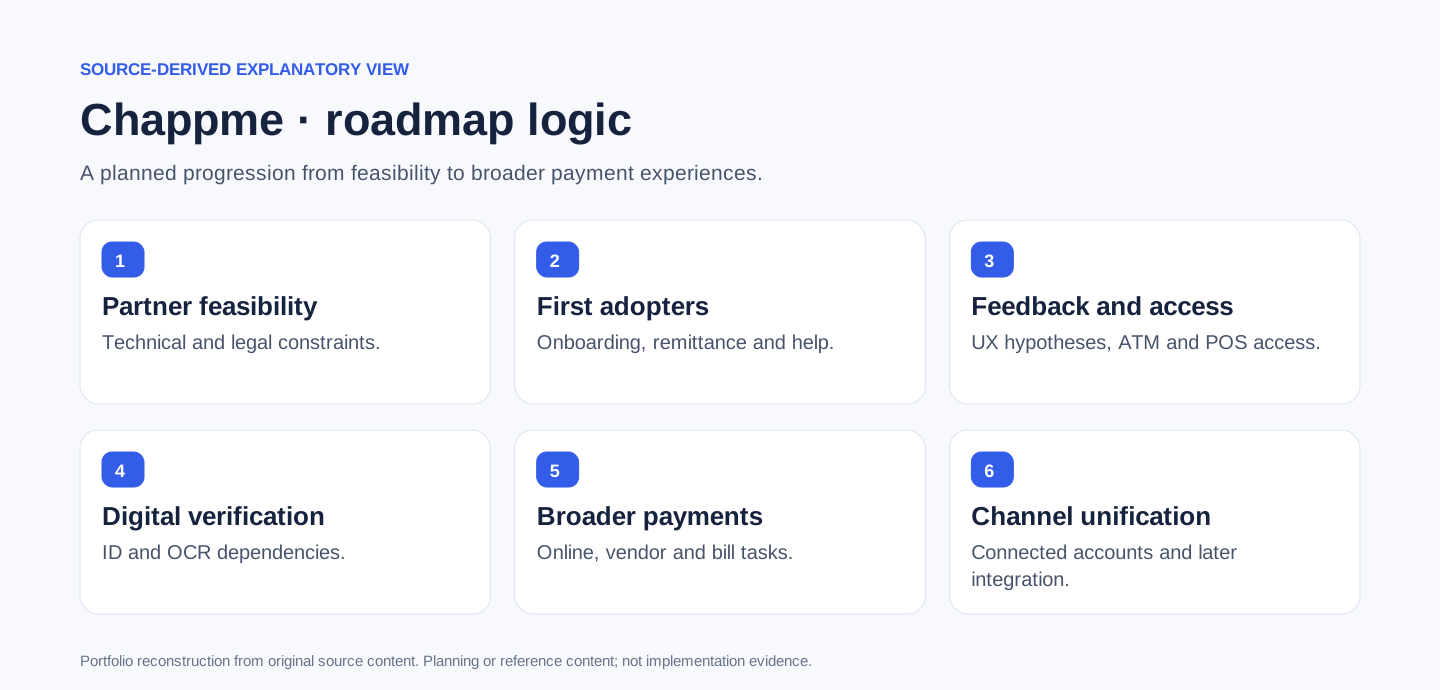
The original June roadmap addresses partially digital onboarding, remittance, assistance for receiver profiles and help at important touchpoints. Later work expands toward underbanked access, payments and channel unification.
These planned capabilities reveal a product thesis: make the early service usable and trustworthy before widening its ecosystem. The roadmap is a planning artifact, not a completed release history.
Put partner and operating constraints first
Partnership flows, a prototype and legal/technical limitations precede the first-adopter MVP. That sequence puts feasibility learning ahead of expensive expansion.
Partially digital onboarding retains an in-person verification step while preparing documents digitally. Full digital verification is a later capability, rather than assumed to be available in the first release.
Make the progression visible
The source board has 28 planned cards in nine groups: Q2 2020, First Adopters, Improve UX/Delight, Expand Experience, Accessibility, Digitization, Unify Channels, Validate and Ideas.
The first-adopter scope is followed by feedback, ATM/POS access for underbanked users, chat hypotheses, digital ID, online/vendor/bill payments, OCR dependencies, family limits and QR splitting. Wider account/marketplace integration comes later.
Treat assistance as an adoption mechanism
Assisted profile creation and help at main touchpoints are product capabilities, not an afterthought. They bridge a customer’s confidence and the service’s verification requirements.
The later Validate work includes retail partnerships and international expansion. These are questions to resolve, not evidence that those partnerships or markets were secured.
Separate a roadmap from learning
A roadmap can make sequencing and dependencies visible; it does not prove that a hypothesis was tested successfully. The parent page locates further versions, inflection discussion and project planning.
A first-adopter measurement plan would connect activation, transfer completion, support dependence and repeat use to the planned capability. That is a proposed evaluation model, not a historical performance claim.
Outcomes and learning
Planned roadmap cards
Original roadmap groups
The original roadmap establishes a concrete capability sequence and a bounded first-adopter direction. It does not establish 28 released features, completed validation or commercial traction.
About the evidence
- Original Chappme June roadmap and parent roadmap index in Notion.
- Per-card authorship, complete delivery and measured outcomes are not established by the roadmap alone.