Define a product, not a checklist
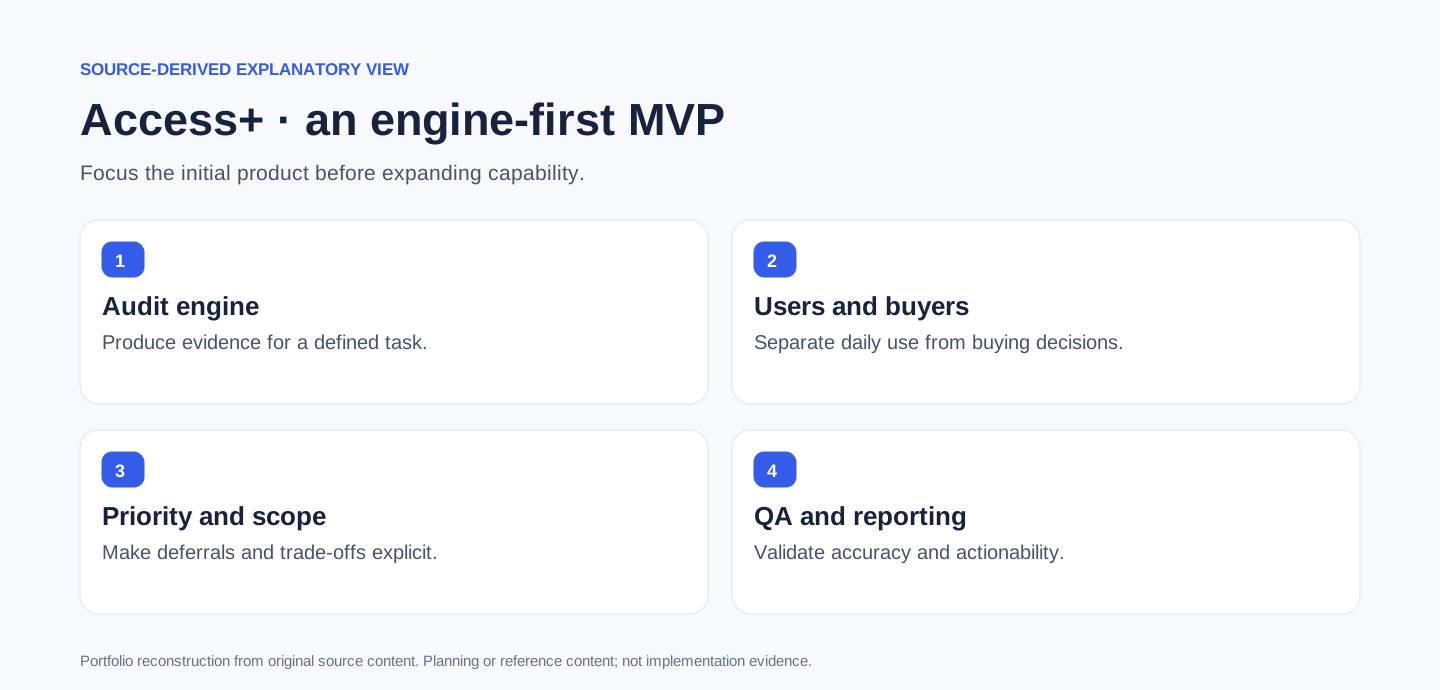
An accessibility audit product has different users and buyers. Practitioners need actionable evidence; product and technology teams need prioritised remediation and reporting. A product vision must decide which of those needs the first version can serve well.
The documented direction on 9 August 2026 attributes product choices to Mohamed. It distinguishes the audit engine from later breadth, so an initial build can produce a useful, evidence-backed result before adding more surfaces.
Make the first version narrower
The strategic choice is engine-first scope. Decisions and deferred work are kept together so the MVP has an explicit boundary rather than an ever-growing feature list.
Rejected options and deferrals are valuable product artifacts: they explain why the team can pursue a focused initial result and what must be learned before expansion.
| Product choice | Purpose |
|---|---|
| Engine-first MVP | Prioritise useful audit evidence before broad feature expansion. |
| Explicit user/buyer distinction | Align daily usage with the person funding or governing the product. |
| Deferred backlog | Protect the first version from unrelated breadth. |
| Evidence-linked scoring/reporting | Make a finding understandable and actionable. |
Sequence capability and acceptance
The phased roadmap specifies deliverables, acceptance gates and effort estimates. Each phase should have a testable output and a reason to continue, rather than only a completion date.
The documents define planned work. Phase completion, production deployment and realised effort savings are not inferred from a requirement.
Build a scoring and reporting model
The KPI/reporting requirements make evaluation part of the product definition. Useful quality checks include evidence accuracy, severity rationale, actionability and the completeness of the remediation record.
Before publishing comparative performance, the product needs benchmarks against a defined task, representative pages and a reviewed reference. Percentage effort reduction and competitor superiority are not treated as results here.
Keep quality responsibilities visible
The decision baseline also attributes product direction and QA responsibility to Mohamed. That is a clearer ownership signal than the existence of a feature inventory alone.
A useful handoff connects a product requirement to an acceptance gate, test evidence and a reporting behaviour. Technical implementation and benchmark outcomes require their own records.
Outcomes and learning
The documented result is a focused product direction, explicit scope decisions, a phased roadmap and measurement architecture. Implemented functionality and benchmark gains are not claimed.
About the evidence
- Access+ vision, decisions/deferred backlog, roadmap and KPI/reporting requirements, 9 August 2026.